
On Candlemas Simeon holds the infant Christ in his arms and, by the power of the Spirit, sees that God has been faithful to the promise given to him —that he would not die before he saw the Lord’s Christ (cf. Luke 2:22-40).
Having seen the Child, Simeon declares those famous lines “Master, now you can let your bondservant depart in peace according to your word, for my eyes have seen your Salvation….” you know the rest.
Of course, the plain and straight-forward reading is correct: this baby Jesus is the fulfillment of God’s promises. But if it was the only faithful reading, if we stop there, then what meaning does Simeon’s song have for us beyond marking a particular moment in space-time?
Or, to put it another way, when Anglicans sing the song of Simeon (the ‘Nunc Dimittis’) each night in our evening prayer office, are we doing anything other than a kind of historical reenactment? Of course not. We believe it has application to our lives. And what I’d like to suggest here is that the most faithful form of doing biblical application is typological —following the type and model of Jesus.
St. Augustine, in almost everything he wrote, developed this idea of the ‘totus christus’ —the whole body of Jesus. What is true of Him who the Head should draw those who are the Members of the Body into that truth.
This is true of the doctrine of justification, right? What is true of the Head, Jesus’s righteousness, is made true of me, and then the Spirit works in me to lead me into holiness of life which is Jesus Holy Life lived-out in my body.
This is how St. Paul directs husbands and wives to love one another, typologically; by drawing a typological relationship between Christ’s love and union with the Church and then applying it to believers.
The strange thing is that while reformed-ish and evangelical-ish people in the west are ready to think typologically in some things (as above in justification and in marriage) we balk at its wide application across the Scriptures.
Matt Chandler’s (in)famous sermon about the life of David is a poignant example: “You’re NOT David” he told his audience (God’s people, gathered for worship). His earnest desire, commendable, was to confront people with their own self-orienting egoism which confuses the Preeminence of Jesus with my role in His Story. Okay. That’s fine as a design, but the exegesis is faulty.
St. Paul’s teaching to the Ephesian husbands was not “You’re NOT Jesus!” Paul’s instruction was, rather, “Be Jesus!” The answer to human inadequacy and failure is not wallowing in it. It is to demand, fiercely, or lovingly, or winsomely, or harshly even at times, that Christians be imitators of Christ, partakers of the Divine Nature. It is to say “Christ in you is the hope of glory.”
But what about sinful humans? Beloved friends, David was a sinful human whom God used as a type and shadow of his Perfect Son. The answer to human sinfulness is to repent —metanoia to turn around— and follow Jesus carrying your cross after Him. Don’t sin, in other words, because Chris is sinless and you are called to image Jesus.
So what can we say about Simeon at Candlemas? What are we doing each evening when we say the Nunc Dimittis? We are proclaiming over our day and over one another that God has once again proven himself faithful to his promises.
Here in my life and yours the Spirit is doing a mighty work of working-out our salvation, leading us from glory to glory in the Son. “I have seen your goodness Lord, today in your care and redemption of me —Thank you!”
Moreover we can think of the NuncDimittis generationally. Each generation of Christians holds the next generation in their arms like Simeon holds the infant Jesus “Look! Here you are! God promised you would come, and so you have! Thank you God, you have been faithful!”
There were generations upon generations of saints before I was born and before I was baptized who prayed for the next generation of believers. I am here now and in the Faith, at least in part, becasue God was faithful to answer their prayers. Each successive generation of Christians enters into the Story as an answer to the promises God made to the previous generation.
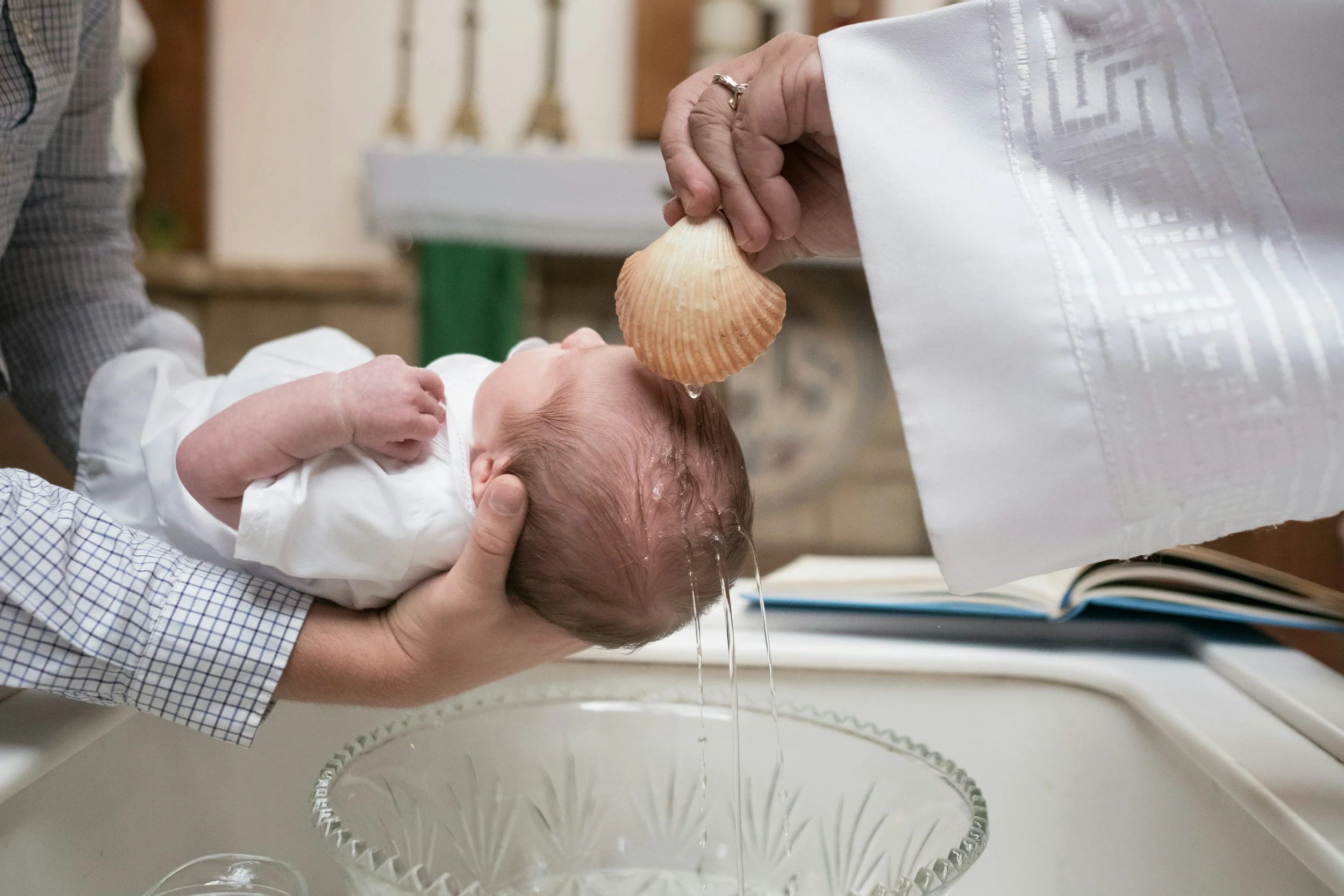
We have a widow at our church in Honolulu, each year on Candlemas my thoughts and prayers focus on her. She prayed decades before the next oldest christian in our parish was born and baptized. She stands as a kind of Simeon to us, little christs (for that is what ‘christian’ means), who she holds in her arms as the fulfilment of prayers she has been making. Likewise I stand in the middle of life’s forrest, between overlapping generations, and hold in my hands the newly baptized little infant and, pulling her from the water where she has receievd the Spirit of Christ, where her life has become Christ’s, hold in my hands an image of God’s salvation.
Blessed be the God of Israel, He has been mindful of his servant, and has been faithful to our father Abraham; here in this little baby I behold the certitude of God’s promises, a foretaste of The Fulfillment Yet to Come.
Amen.
