


We live in a culture that imagines itself very parrhesia-ful, very proud and bold. And yet, we aren’t. All of our ostensible boldness and loud proclamation is a kind of veil drawn across the surface of an ever-deepening state of shame and panic. Foucault regards parrhesia as costly speech, a truthfulness that risks the life of the speaker. Contemporary American rhetoric is not parrhesia, for we want the costly speech but not the actual paying of the cost. We like the feeling of speaking truth to Power, but then are surprised when those in power prove just how powerful they are.
Read moreDiffering stories of human development

They are “so close” because, really and truly, resurrected humanity shall be clothed in glory (2 Cor. 5.1-5; cf. Rom 8.18-25) and move from glory to glory (2 Cor. 3.18); we shall be clothed in immortality (1 Cor. 15.50-55), shall draw food from the Tree of Life (Rev. 2.7), and rule over angels (1 Cor. 6.3)?
Read moreOn Scripture, a sermon follow-up

When people ask us, “What is the Bible?” we can give them a lot of answers and cite a lot of self-referential passages wherein the Scriptures speak about the Scriptures (e.g. 2 Tim. 3:16). But often that question, “what is the Bible"?”, is asking for more than a simple description. Folks who ask “what is the Bible?” are often asking for more than a single-sentence definition. Without denying the artful simplicity of simple descriptions and definitions, here are some a few more expansive reflections on “what is the Bible?”
Read moreWaiting and resting: notes on Genesis 8

What is Noah waiting for?
Read moreLaughter as confession

Laughter is a funny thing –but what is it? Is it speech? Is it non-speech, like the thump of a stone in the grass? Is it something “in-between” –a part of that company of things which includes the bark of dogs, the purr of cats, the whisper of tree branches, the caw of birds?
Read moreThings "different" and things "the same"

This is a paradox.
How can two things be “the same” and yet “different”? What allows for this tension?
Read moreJohn the Baptist's midsummer rollick

Standing directly across from Christmas, the Feast of the Nativity of St. John the Baptist marks the dawning of something new. John said he was not the light, but that he came as a witness to it. On this day we light a fire, a big brightness, and we bring the brightness of the summer sun into the orbit of God’s Story. We bring the order of Creation into the Order of Redemption.
Read moreFr. Brown against determinism

In an age in which the goetic malaise of Determinism lays thick and miasmic like fall-out, it is the place of the church to embody the truth that “whom the Son sets free is free indeed” (Jn. 8:36).
Read moreWhen even kindness becomes terror
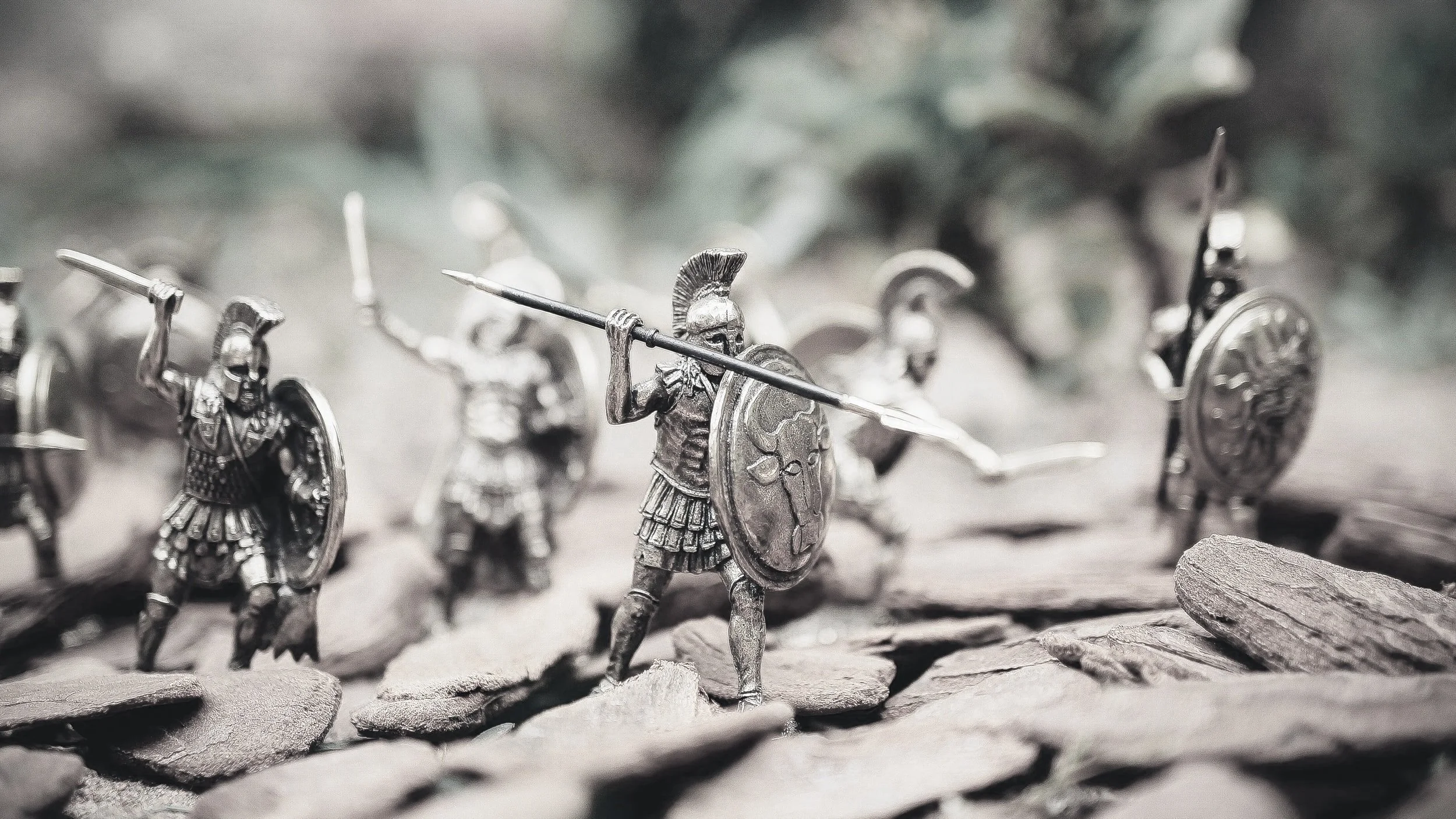
The civil war into which Israel falls is not a consequence of this system but its very mechanism. When the state becomes a self-originating polity, and no longer the servant and heir of an law which came before it from something beyond it, all confidence in its own government falters. Every voice of opposition is interpreted as a voice of a rival. When the ideal king of Deuteronomy 17 rules having received and recorded the law from the Levites, dissent does not merit violence. The voice of dissent does not equal a contestation of the authority of the Law.
Read moreWeek before Pentecost

On Shavuot, grain, wine, wine, oil were brought-in and a feast was made. So also on Pentecost, the oil of the Spirit is poured-out, the wine of the Spirit if given, and the harvest of the Gospel is annually celebrated.
Read more
Quisque iaculis facilisis lacinia. Mauris euismod pellentesque tellus sit amet mollis.