
Between the end of the Theopolis Ministry Conference and the beginning of the “Normie” Fellows Program, the crew at Beth Elim (that’s the name of the Leithart’s house) have all the hours between rooster-crow (sun-up) and vespers (first star int he sky) to catch our breath.
During this breath-catching Wednesday a few weeks ago we were graced during coffee-time with the presence of my good friend Stuart Klenk, the president of the Order of Onesimus (our Theopolis Alumni Association).
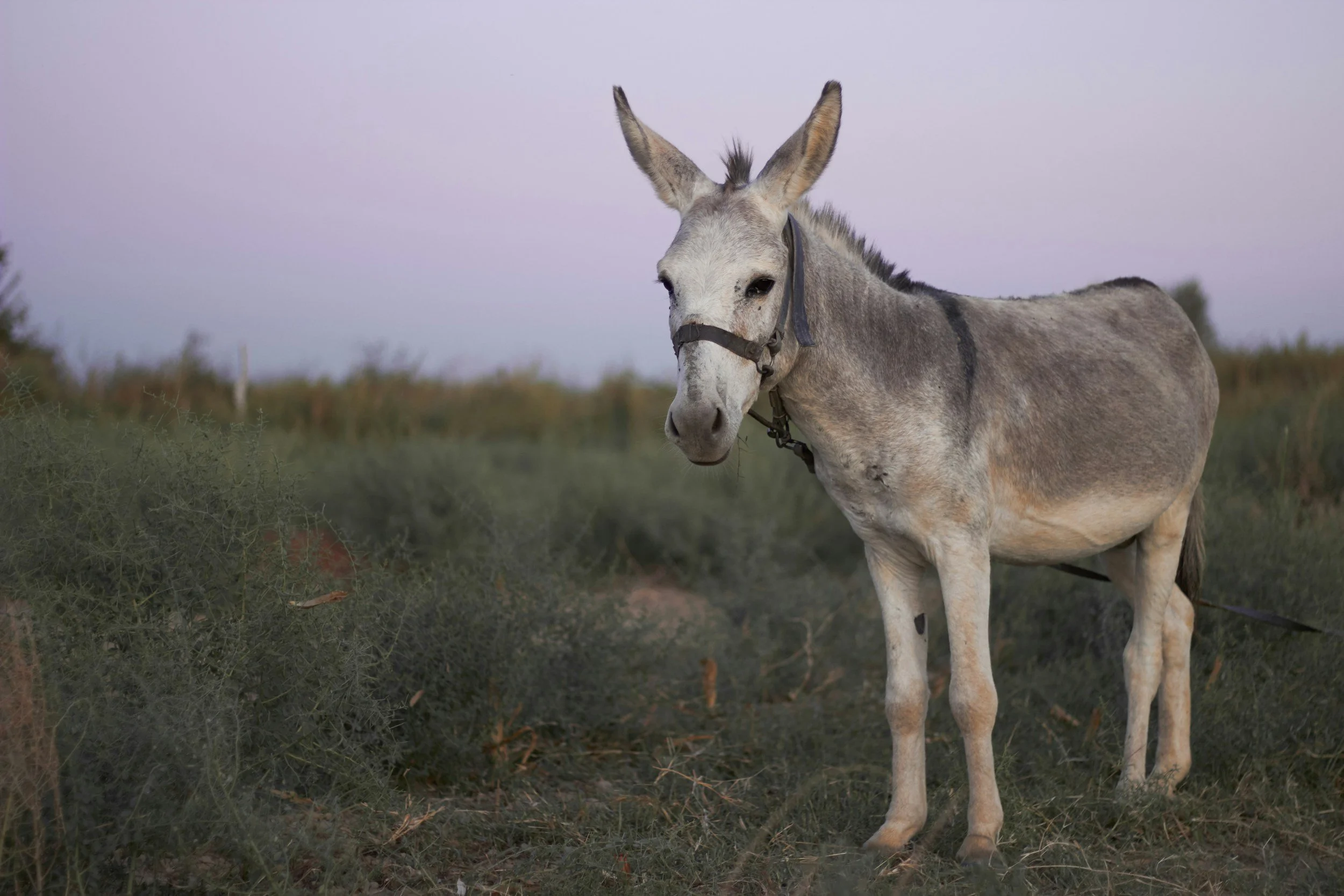
If you think I nerd-out on biblical symbolism and numerology, you should meet Stuart. The topic of our conversation a few weeks ago (besides the perfunctory Theopolis business)? Donkeys.
Particularly Stuart was expounding to us why there are so many donkeys in the book of Judges. It was, strangely now that I think of it, a thought that had never really struck me with any severity. “Man alive,” I said, “you’re right, there are a ton of donkeys in Judges… actually in the books of Samuel too!”
“Exactly!” Stuart said, a strangely luminous twinkle in his eye, “that’s exactly right.”
Here’s his theory in brief… well, and I’ve expanded a few places (confession: I’m convinced, it’s donkeys all over the place):
The brothers of Joseph, the sons of Jacob saddle donkeys for their trips to Egypt (cf. Gen. 44:13). They are a picture of princely estate. The princes of Jacob’s household, the princes of the tribes of Israel, are donkeys.
Genesis ends with the prophecy of the promised Ruler coming from the line of Judah (Gen. 49:8-12).
Central to that promise is that this Ruler will be known by the sign of his “tethering his donkey to the vine” (v.11).
Throughout the book of Judges donkeys mark the sons of those God raises-up to judge his people: Jair has thirty sons who ride of thirty donkeys (Judges 10:3-4); and, later, Abdon has forty sons and thirty grandsons who ride on seventy donkeys (Judges 12:13-14).
The Levite of the infamous Judges 19, in his quest to redeem his concubine, loads up all of his supplies and travelling goods on his —what do you think? Donkeys of course.
Riding donkeys is, moreover, according to Deborah and Barak the symbol of princes, leaders and rulers, those who have authority in Israel during the time of the Judges. They address their victory song to those who “ride on white donkeys […] who sit on rich saddle blankets” (Judges 5:10). Deborah and Barak command these local and tribal leaders, the princes of the people, to “tell it out!”
So also Job, a contemporary of the Judges, as an Edomite king has many donkeys (Job. 1:3) which the Lord takes away and then gives-back doubled (Job 42:12).
But, as readers will know, there’s a problem in the book of Judges, for all the superabundance of donkeys, no one arises who can rein-in Israel; no Ruler emerges who can tether the donkey to the vine. “In those days there was no king in Israel. Everyone did what was right in their own eyes” (Judges 21:25). Everyone’s a donkey! Who can wrangle these wild asses?
The book of Samuel meets us in this place of trying to coral these wild donkeys of Israel. And who does the Lord bring-up as the first king of Israel? Saul, a man whom we first meet on a journey to do what? That’s right, find his father’s lost donkeys (see 1 Sam 9 and 10).
But the story is not over. Saul does not fulfill the donkey-taming role we’ve been hoping for. He prepares the way for someone else. He points beyond himself to another who will rise to take his throne. For Saul is not the Heir of Judah, he’s a Benjamite (1 Sam 9:1). Someone else saves his father’s donkeys (1 Sam 9:20). While at first he is a good king, he shows little regard for the Law of God.
This is critical. It is a burning love for the Law that was, per Moses, supposed to be the governing principle of the King that God was going to give his people: “When he takes the throne of his kingdom, he is to write for himself on a scroll a copy of this law, taken from that of the Levitical priests. It is to be with him, and he is to read it all the days of his life so that he may learn to revere the Lord his God and follow carefully all the words of this law and these decrees” (Deut 17:18-19).
Thus we wait for David, the donkey-taming, brother ruling, Law-loving prince of Judah to arise and tether Israel to the vine of God’s covenant blessing. Rightly does Abigail, for instance, send-out donkeys of provisions for David’s men, and so turns away his wrath (1 Sam 25:18-35).
Boom!
But we’re not done yet. David, of course, is a type and shadow of Christ —the True Heir of Judah and the True Donkey-taming King. Think I’m crazy (well, Stuart’s with me, so it’s a we that is crazy)? Well riddle me this: on what does the royal heir of Jerusalem ride in procession into the City on Palm Sunday? Is it not, in fact, “a colt, the offspring of a Donkey?” (Zech. 9:9; Matt. 21:1-11; Lk. 19:28-40; Jn. 12:12-19).
And what does that Donkey-Tamer do when he enters the Temple precinct the following day? He takes a rod to the backs of the rulers of the temple who have been acting like a bunch of unruly donkeys.
