

Those in power here, both the pharisees and Herod, are afraid of the power of Jesus. And the best policy for those who rule in fear is to exercise dominion and control over others by spreading fear. Spread the worry and bring the upstarts to heel in being anxious about tomorrow’s troubles.
Read moreIncommensurate goodnesses

p/c Victor Camilo via unsplash
I remember being pushed in a stroller by him through the wild labyrinthine corridors of queues of Disneyland; I remember being asked “are you buckled in?” and “are you hungry?” by him when I was a kid. And now here I am asking similar questions of him. Now I am pushing the cart around. Now I get the valet ticket, now I grab the car, now I have to remember where the car is, etc.
Read moreLifted-up Lent

p/c Orkhan Farmanli via unsplash
Transfiguration leading down into Lent

p/c Allesandro Bellone via unspalsh
Like Peter we finish-off the season which included Candlemas, the visit of the Magi, the Baptism of Jesus, the Wedding at Cana, and Jesus’ proclamation in the synagogue that he has come to proclaim good news to the poor and freedom to the captive, with awestruck desire to keep it going like this: “Let’s build three tabernacles…” (Matt 17:4). But keeping it going like this is not the answer. The tabernacle served for a season in God’s story to keep the glory (Ex. 25). But now we come to that moment where the glory must break-out (Is. 9:1-2, 58:8; Matt. 4:16). We can no longer be kept safe from its fiery burnings, from the living flame of love (Ex. 3:2-3; Song. 8:6; Is. 33:14).
Read moreCarnival: Count-down to Lent
p/c Nacho Diaz Latorre via unsplash
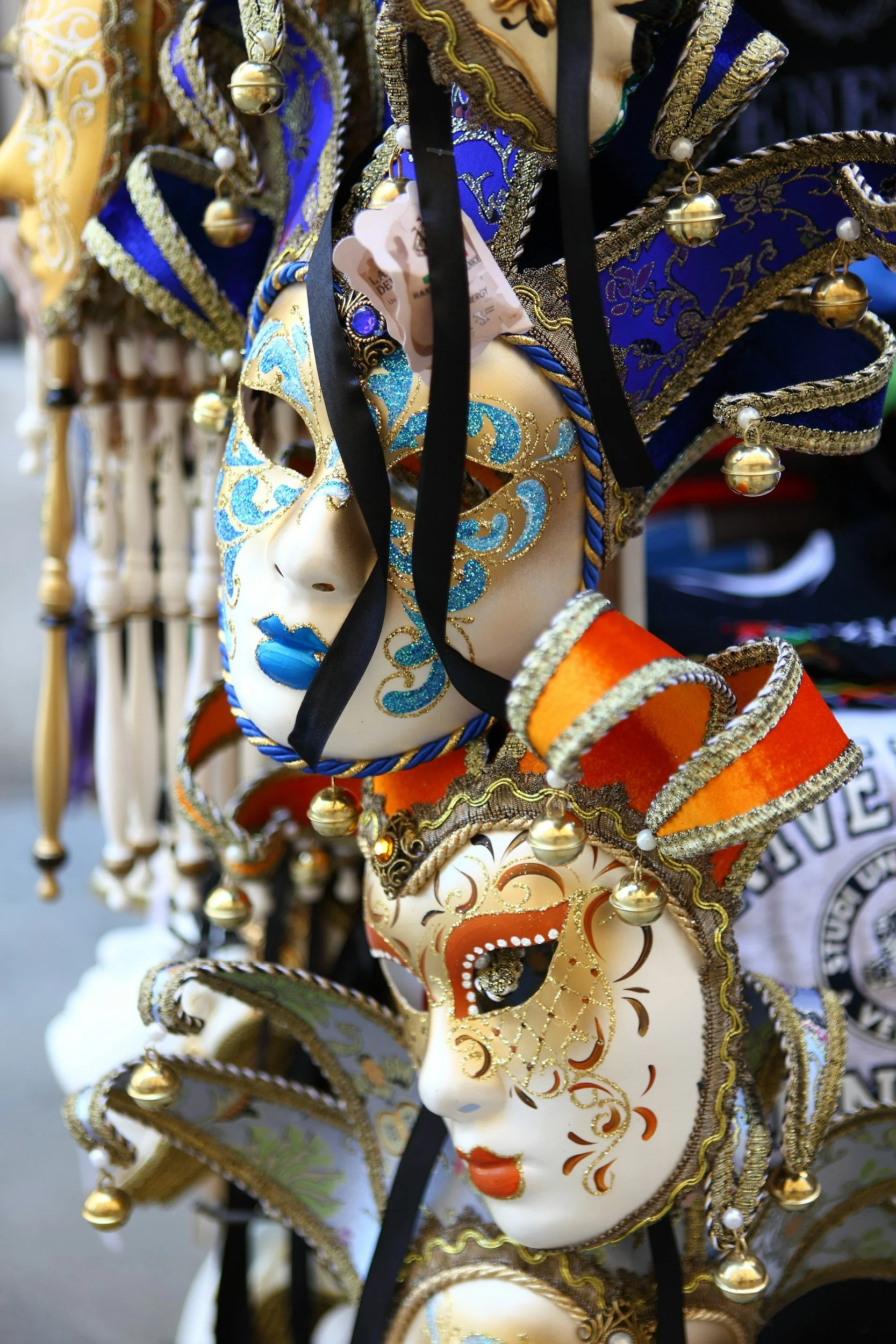
“Carnival” today often conjures-up the worst images of Mardi Gras celebrations: drunkenness, debauchery, sequin-laced costumes, gaudy masks in diamante, etc. Unmoored from the Gospel Carnival loses its Christian origin and becomes little more than a kind of sad “last hoorah” before the severities of Lent, a Barnum and Bailey inspired revolt against the upcoming sobriety. Carnival and Mardi Gras have become in their modern forms the epitome of what Guy Debord criticizes in The Society of the Spectacle…
Read moreWasted time

p/c Jon Tyson via unsplash
…in our efficiency addicted culture in which all our minutes must weigh on the scales of utility such moments are fertile for frustration. “Waste of time!” we mutter under our breath when the TSA agent pulls someone aside and stalls the line. We look-up “life-hacks” (wicked terrible evil phrase) to help us avoid the waste of time —which help us make all our moments of waiting ultimately productive and efficient. “Because we look at life exclusively from the perspective of work and performance, we view inactivity as a deficiency that must be overcome as quickly as possible” explains Byung-Chul Han (2024: 1)…
Read moreRepost: Offering our lights to God on Candlemas

p/c Marcus Wallis via unsplash
Lights and voices.
That is what we bring to Candlemas: lights and voices. We offer to God the sound of our human voices which is the true and laudable sacrificial act of giving God ourselves in a very real sense —an act to which all of the bloody sacrifices of the Tabernacle pointed. The human body is, as Peter Leithart and Jim Jordan have argued, the original instrument.
Read moreOur vigilance is nothing if it is not merry; Or, be like Gandalf

There seems to be much talk today in the way of “vigilance, sobriety, alertness.” On every side sounds some call towards activism. We are come to the breaking of the epoch, it seems, and all around are horns sounding, calling us to action. Activism —of some ill-defined, generic and weary kind— has become our corporate steady-state. Uncountable for me are the number of recent sermons, essays, forms of punditry, videos, media posts of various kinds, etc. which begin along the lines of “it is important for us, in this moment to make sure we…” followed by some call to action…
Read moreEpiphany brightness

p/c Julien DI MAJO via unsplash
…some things are mysterious because they are shrouded and enigmatic. But other things are mysterious because, like the sun, they are so real, so apparent, so obvious that I cannot gaze directly into them…
Read moreNot a nice Christmas

“The Last of the Spirits”, illustration for Charls Dickens’ Christmas Carol by John Lech
The word “nice” is a rotten term. Originally it meant “foolish,” being an English word composed of two Latin terms: “ne” (“not”) and “scire” (“to know”). Over time it developed in meaning to its current form meaning something like “kind” or “good” but without any of the substance of kindness or goodness (see the entry for “Nice” at the Online Etymology Dictionary).
Read more
Quisque iaculis facilisis lacinia. Mauris euismod pellentesque tellus sit amet mollis.