

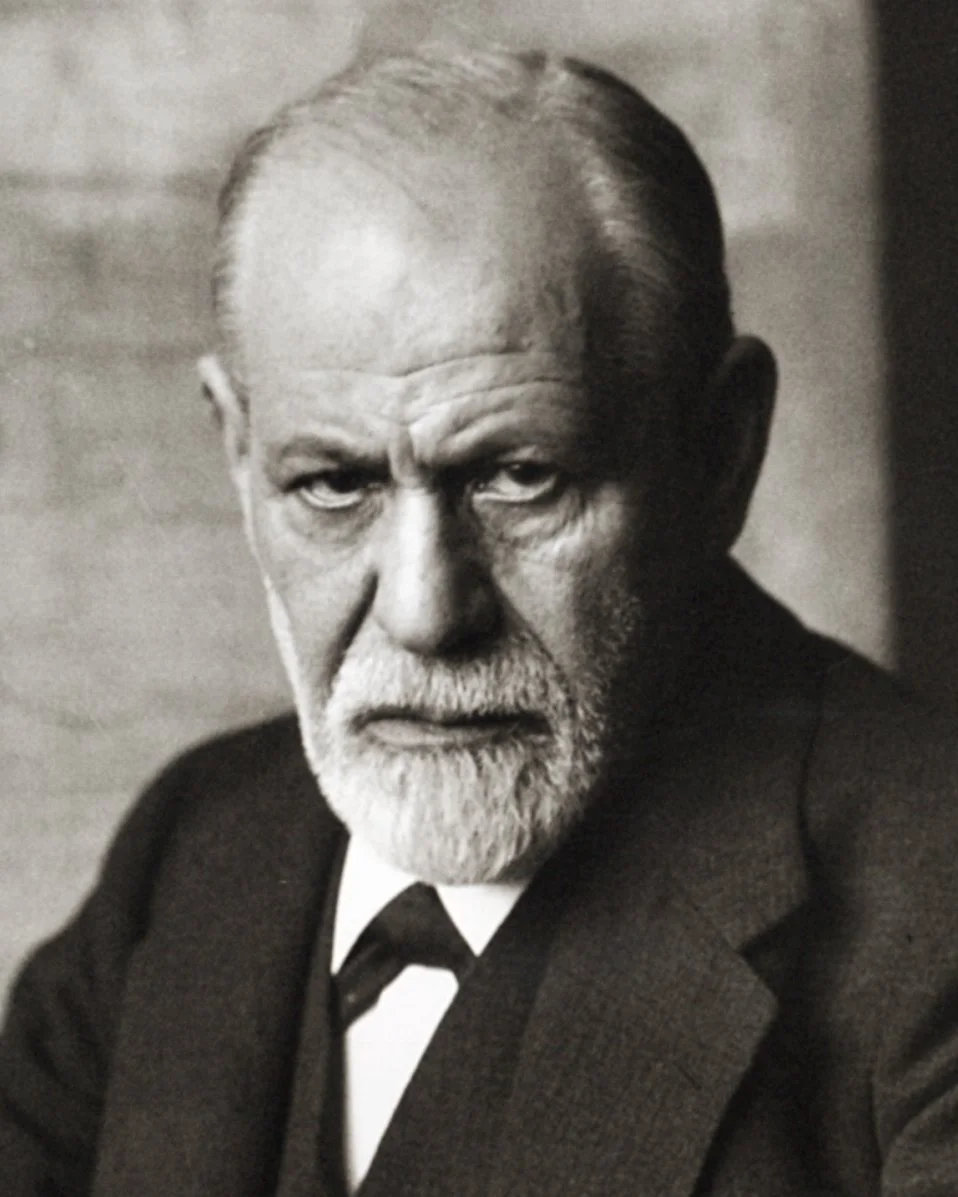
Sigmund Freud did not believe in love —did not believe that humans were capable of it. “He insisted that it was the illusory result of a narcissistic passion for one’s own I, or rather, one’s own narcissistic ideal” Mossimo Recalcati explains (2021, p.9).
Freud, according to Recalcati, “believed that to love means nothing more than to adore one’s own ideal image embodied by the beloved” (ibid). Thus when someone says “I love you” what Freud believed was actually going-on was nothing more the person declaring “‘I love myself through you’” (ibid).
Now, enough of us have experienced the brokenness of sin to know that this is sometimes true —perhaps often true. Left to ourselves fallen humanity is wont to abuse (meaning, literally, to turn against its intended purpose) the very things we love, deploying them for our own selfish interest. As Oscar Wilde puts it, “…all men kill the thing they love” (Ballad of Reading Gaol).
But for all the truth of Freud’s assertion he is wrong on two counts: (1) he universalizes the pathology of sin, assuming it to be the “really real” way things are; and (2) fails to account for the redeemed way in which a person can love themselves in loving another.
First, the universalization problem:
I find that Freud, as a general rule, does a good job reporting problems but a poor job understanding or treating them. He is often guilty, as he is here, of treating the way things are as if this is the way things ought to be. Or, to put it another way, it is hard to address sin if you have gotten rid of the category.
The abuse of love, while a real problem, is not the way things ought to be —not the way they were intended to work. To be blunt: Freud’s terrible at universalizing schematics for a humanity made in the image of the God he rejected. Poor Sigmund, “it is difficult to kick against the goads” (Acts 26:14).
Isn’t the problem with the narcissist, in fact, not so much a lack of love but a perversion and disordering of the capacity of love with which our Creator endowed us?
Second, a redemption of the idea of “loving myself through others”:
There is, in fact, something about loving another that exceeds strictly agapaic thresholds (“I don’t care whether they ever reciprocate”) and which belongs to the realm of desire, longing, and eros (“I want them to want me”).
Jesus himself prays not “Father, here now I go to the Cross, and I don’t really care about whether or not my beloved ones is with me in eternity” (no!) but rather “Father I desire that those you’ve given me would be with me where I am and see my glory…” (Jn. 17:24).
Paul calls husbands to imitate Christ’s desiring example when he calls them to love their wives as Christ loved the Church (Eph. 5:25-27). Eerily similar to suspicious ol’ Freud (cited by Recalcati, above) is Paul’s instruction that “He who loves his wife loves himself” (v.28).
How are we to reconcile this? Jesus desires? Husbands should love wives because in doing so they love themselves? Doesn’t this make all Christian love kinda narcissistic? Simply put: no; or, at least, not necessarily.
Well then, what’s the difference between a narcissistic loving of oneself in loving another and a Christian loving of oneself in loving another?
Easy answer: the Cross. The Cross unifies lover and beloved (Christ and the Church, Husband and Wife, two friends, etc.) not by homogenizing them, not by eschewing one in the interest of the other, but by including of them in one another’s life without blur or indistinction.
The Cross is the antidote to the narcissistic problem which plagues modernity in a uniquely ubiquitous way. The Cross decentralizes the self precisely by puncturing it upon the life of the other person.
I lay my life down for the person I love only to pick it back up again (Jn. 10:18). In love in die like a seedling in the ground of the other person and then, only in the dying, do I rise and bear fruit (Jn. 12:24; cf. Jn. 15:8ff).
It is the narcissistic self that dies in the Cross of reality with the Beloved, and it is the true self, the glorious delighted-in, enjoying being desired back, self that rises from the tomb in every easter which marks the seasons of my love for another person.
