

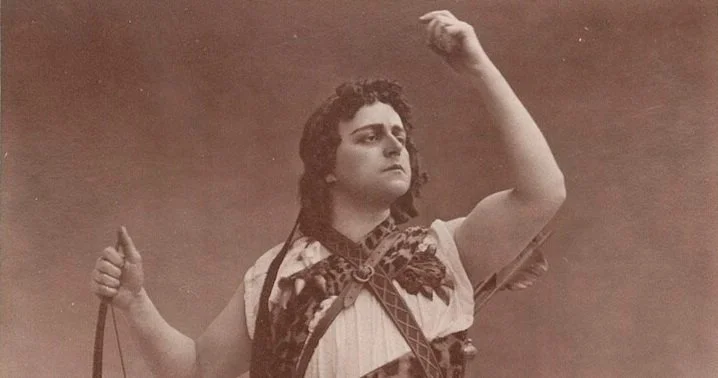
“[…] If it be sweet/
Dare you not try its taste? Must you be ruled /
For ever by the wild timidity /
and scruples of a savage? […]
What heart has ever been too brave to be
Vanquished by Venus? […]”
Jean-Baptiste Racine, Phedre, (trans. Margaret Rawlings), I.1
Theramenes’ advice (above) is —like most folly— spun in threads of silvery truths. He is encouraging his master, Hippolytus, to follow his growing affection for Aricia, the foreign princess which his father (king Theseus) holds captive in the palace.
Hippolytus has grown to love her and she him, though their peoples are at war. One can imagine a montage in which the two of them sing “…there may be something there that wasn’t there before…” from Disney’s Beauty and the Beast (1991).
Hippolytus is torn, however, because his love poses problems for his father and his father’s state of affairs in Troezen.
Theramenes encourages Hippolytus to give full vent to his feelings offering two primary arguments: (1) if something is good shouldn’t it be enjoyed? and (2) love (here “Venus”) is not something you can just repress and run away from.
On one level, both of these arguments are good: All good things are good and can be enjoyed —God’s not anti-pleasure, he’s the Author of it… or, more exactly, he is Pleasure Himself. And love is an unstoppable force.
But just because these two proverbs hold true it does not render Theramenes’ advice wise or sound.
All good things can be enjoyed, perhaps, but there’s a lot of importance about how, and who, and when a thing is enjoyed on which the entire enjoyment is dependent. I love eating fruit, I enjoy a glass of wine, and I love bacon. There are few things more unappealing, however, than a biting into the hardness of pre-ripe fruit, or swallowing the pipeage that precedes the vinting of wine, or of munching on a pound of uncooked bacon.
There may be a sweetness to the love between Hippolytus and Aricia that they may one day share, but a whole lot of that sweetness will depend on how the two of them walk-out into the dangerous territory of romance. A things' inherit goodness does not act as license for my theft or spoilation of it.
Additionally —and especially if you are a hopeless romantic like me— Love is not a thing to militate against. Bad things happen to folks to refuse love (e.g. Sauron, Voldemort, etc.). But There is a great variety of ways to respond to the gift of love, and many forms that the variegated loves of our lives can inhabit. I love my wife, my house, my kids (individually and as a lump sum), my parishioners (again, individually and as a lump sum), my book collection, and Dcn. James. And I love them all very differently.
The expression and enactment of these several loves takes differing forms based on the variety of relationships. Even among persons or things in the same class of relationship (e.g. “lover” or “friend”) I will love them differently respective of the uniqueness of who they are and who we are as two people sharing the bonds of love.
Theramenes thinks that because its love it demands a reckless heedless course —the kind so popular in contemporary culture: hot, quick-tempered, passionate, wild-fire, transgressive, giving-no-figs-for-what-people-will-think, permissive in the uttermost, co-dependent, listening-to-‘babypullmecloser’-by-the-chainsmokers, kind of love. The kind of love of which the sadness of the deaths of Romeo and Juliet is the archetype.
This kind of love, Theramenes’ notion of loving action, only conceives of love that says “yes” and “right now.” It is, therefore, a love that has no real future. It has no room in its vocabulary for “wait” and “no” and “not right now, but later” and “not this, but this instead.” It is a love that burns-out. For all its heat it can never seem to keep burning beyond the initial glimmering flash.
And here’s the point: precisely because that kind of flash-in-the-pan follow-yer-heart love moves by casting-off reality, it struggles to stay alive in the face of the messiness of the Real (e.g. parents’ problematic demands, social circumstance, the biography of the beloved, other relationships, duties, bodily limitations, etc.).
Jean Racine’s tragedy is just that: a painful account of how the possibilities of truly world-shaking love were foreclosed by trying to slay hold of that love in the wrong way and at the wrong time. Of trying to enjoy the sweetness of love apart from the messiness of the world in which that love has sprung.
What Thereamenes promotes is a love that is free of the consequences of love. But this is ridiculous! What real lover wants a love without consequences? Do not all lovers worthy of the name desire in fact some kind of consequence from the labor of love? Isn’t “bearing the consequences” —really and truly— the definition of a lover?
Isn’t suffering the consequences precisely the way, and the only way, to vanquish Venus so as not to be ruled by her as puppet but to see her transformed from pagan Aphrodite to Lady Charity?
True love (*insert Princess Bride [1987] reference here*) is a courageous disposition that willingly deploys itself to bearing the consequences of the Beloved. True romance, therefore, rather than offering an escape from reality, incites a unending encounter with it. After all, “love,” as Richard Wilbur says, “calls us to the things of this world.”
